
X (Twitter) Outreach Sequences: How to Run Multi-Touch DM Campaigns
Quick Answer
A single DM rarely converts. X outreach sequences send two to four messages over days or weeks to move a prospect from cold to warm to converted. This guide shows you how to build them.
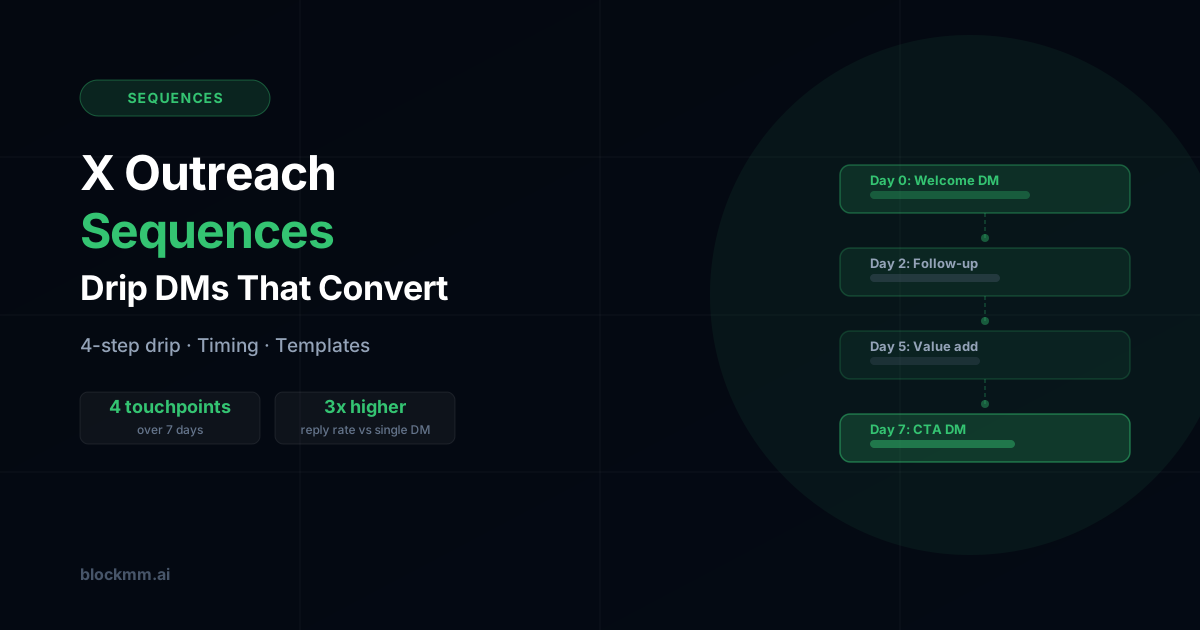
Why Single-Touch DM Outreach Underperforms
Most people send one DM and consider the prospect dead if there is no reply in 48 hours. That leaves a significant portion of potential conversions on the table.
The reason people do not reply to first DMs is rarely disinterest. More often it is timing. The message arrived during a busy moment, got pushed down by other notifications, or landed when the person was on the go and meant to reply later but forgot. A single follow-up sent 48 to 72 hours later, referencing the previous message and adding something new, captures a large portion of those missed opportunities.
A well-structured two to three message sequence consistently outperforms a single-touch campaign. The follow-up messages should never be repeats of the first message. Each touchpoint must add value or offer a different angle.
The Standard Three-Touch X Outreach Sequence
Message 1: The Opening (Day 1)
This is your first DM. Short, personalized, and specific. One clear value statement, one easy ask. Under 60 words. The goal is a reply, not a sale. See our cold DM templates guide for specific scripts for this message.
For follow-back campaigns, this message is sent automatically the moment someone follows you back using a tool like GeniusX. For cold outreach, it is sent manually or through a scheduled sequence.
Message 2: The Follow-Up (Day 3 to 4)
Wait 48 to 72 hours. If no reply, send a second message. This is not a copy of the first. It should reference the previous message briefly, add something new, and keep the ask light.
Example: "Circling back on my message from a few days ago. Also wanted to share this [specific relevant data/post/insight] that reminded me of what you are working on. Still happy to connect if useful."
The new information is the key. If you say the same thing twice, you look like you are not paying attention. If you add something relevant, you demonstrate you are thinking about the person's specific situation.
Message 3: The Close (Day 8 to 10)
If still no reply after the second message, send a final message 5 to 7 days after the follow-up. This message explicitly closes the loop and removes pressure.
Example: "Not going to keep following up after this. If the timing ever makes sense or you want to connect, my DMs are open. Appreciate you taking a look at my earlier messages either way."
This approach works for two reasons. First, it shows respect for the person's time and decisions. Second, some people who were not ready to reply at messages one and two do reply to a "final message" because the low-pressure close removes the barrier.
How to Structure a Sequence for Follow-Back Campaigns
Follow-back campaigns work differently from cold outreach because Message 1 is warm rather than cold. The person just followed you. They are already interested. This changes the sequence timing and content.
Message 1 (immediate): Short welcome DM sent within minutes of the follow-back. Acknowledge the connection, state your value clearly, leave the door open for conversation. No hard ask yet.
Message 2 (Day 5 to 7): If no reply, a soft follow-up. Reference a post they made or a topic they cover. Ask a simple question or share something relevant to their work. Goal: start a genuine conversation rather than push a pitch.
For follow-back campaigns, a two-touch sequence is usually enough. The follow-back already created the warm signal. If two well-crafted messages generate no response, the person is either not actively checking their DMs or is not interested at this time.
Adding Value at Each Touchpoint
The most common mistake in sequences is treating follow-ups as reminders rather than new touchpoints. A follow-up that says "just checking in" or "wanted to follow up on my previous message" adds nothing. It tells the recipient they have nothing new to read.
Every message in a sequence should deliver something independent of the previous messages: a relevant stat, a post or article that connects to their work, a question that invites a quick easy answer, or a specific personalization based on something they posted recently.
The test: would this message still make sense if the previous messages had never been sent? If yes, it is a strong standalone touchpoint. If no, it is a lazy follow-up that mostly signals you are following a script.
Reply-Based Engagement Before DMs
One effective approach to warming up X outreach targets before the first DM is to engage with their content publicly first. Reply thoughtfully to a post they made, add value to a thread they started, or quote-post something they shared with your perspective.
After two or three genuine public engagements over one to two weeks, the first DM is no longer cold. The recipient has seen your name, read your replies, and formed an impression. This dramatically increases reply rates for the first DM.
This approach is more time-intensive than pure DM outreach, but for high-value targets where a single conversation could lead to a significant partnership or sale, the investment is worthwhile. Use automated follow sequences for volume prospecting and reply-first engagement for your top 10 to 20 highest-priority targets.
When to Stop a Sequence
After three unanswered messages, stop. Mark the contact as inactive and do not message them again for at least 30 days. X monitors DM complaint rates and sending repeated unrequested messages to the same account after no reply is the behavior most likely to trigger a DM restriction on your account.
Exception: if a significant amount of time passes (30 to 60 days) and you have genuinely new and relevant information to share, a single re-engagement message is acceptable. Frame it as new information rather than a follow-up: "Something new on [topic they care about] that I thought might be relevant to you."
Respect for the recipient's decision not to reply is also part of what makes outreach feel credible rather than spammy. The best X outreach practitioners have a reputation in their niche for being worth replying to. That reputation is built by not being annoying and by consistently offering real value in the messages they do send.
Auto Follow. Auto DM. Grow on X with GeniusX
AI finds accounts in your niche, follows them, and auto-DMs every new follower the moment they follow back. No passwords. No manual work. Starts at $20/month.
Frequently Asked Questions
- What is an X outreach sequence?
- An X outreach sequence is a planned series of two to four DMs sent over multiple days to the same prospect. Each message adds value or moves the conversation forward without repeating the previous message. Sequences work better than single DMs because they give prospects who were busy or missed the first message a second chance to engage.
- How many DMs should I send in a sequence before stopping?
- Three messages is the standard for most outreach scenarios: an initial DM, one follow-up 48 to 72 hours later, and a final message 5 to 7 days after that. After three unanswered DMs, continuing is likely to annoy rather than convert. Mark the contact as inactive and move on. Quality over volume.
- What should I say in a follow-up DM on X?
- A follow-up DM should reference your previous message briefly, add something new (a data point, a relevant post, a specific question), and keep the ask small. Never resend the same message. The second DM should add value or offer a different angle. A good structure: 'Following up on my last message. I also wanted to share [specific, relevant thing]. Still happy to connect if useful.'
- Is it okay to follow up more than twice on X?
- Two follow-ups after the initial message is the limit most outreach professionals use. A third follow-up is acceptable only if significant time has passed (two weeks or more) or if you have something genuinely new to add. More than three total messages without a response will usually be seen as spam and risks getting your DM capability restricted by X.