
Volume Bot vs Market Maker: Which Is Right for Your Token?
Sandy
Head of Content · Block AI
Quick Answer
A direct, honest comparison of crypto volume bots and professional market makers. Understand the mechanics, costs, risks, and use cases for each approach before making a decision for your token project.
Understanding the Core Difference
The decision between a volume bot and a professional market maker is one of the most consequential choices a token project makes in its early trading lifecycle. The two approaches may appear to solve the same problem, which is generating trading activity for a low-volume token, but they work through fundamentally different mechanisms with radically different implications for the project's long-term prospects.
A volume bot generates activity without creating substance. A professional market maker creates substance, and activity follows as a natural consequence. Understanding this distinction is the foundation of every practical comparison between the two approaches.
What a Crypto Volume Bot Does
A crypto volume bot executes automated buy and sell transactions between wallets controlled by the same operator. The bot buys the project token using a paired asset, waits a configured interval, and then sells it back. This cycle repeats continuously, accumulating on-chain transaction records that analytics platforms count as trading volume.
From the perspective of a DEX screener or an exchange's raw volume metric, the transactions look identical to real trading. A buy of $1,000 worth of a token generates $1,000 in volume whether it was executed by a genuine market participant or by an automated circular trading loop. The volume bot exploits this metric without delivering the underlying economic substance that the metric is supposed to measure.
The consequences of this hollow activity emerge over time. The bot generates no real buyers who become holders. It creates no genuine price discovery from supply and demand. It does not attract organic traders because it does not improve the trading experience: spreads remain wide, order book depth is zero, and price impact on meaningful-sized trades stays high. The volume number goes up, but none of the downstream benefits of real volume materialize.
What a Professional Crypto Market Maker Does
A professional market maker places simultaneous buy and sell limit orders at prices near the current market price. The buy orders (bids) sit below the current price; the sell orders (asks) sit above it. The gap between the highest bid and the lowest ask is the bid-ask spread, and the market maker earns this spread as profit when genuine traders fill the orders on either side.
This activity creates fundamentally different economic outcomes compared to volume bots. Every filled order is a genuine trade between the market maker and a real organic trader, generating real trading volume that reflects genuine market activity. The presence of competitive bid-ask prices narrows the spread, which reduces the cost for any trader to buy or sell the token. Reduced transaction costs attract more traders, who generate more organic volume, creating a self-reinforcing virtuous cycle of market quality improvement.
The visible order book depth that a market maker creates also signals credibility to institutional investors and exchange listing teams. A token with a deep, tight order book looks professionally managed. A token with zero order book depth and a wide spread signals either abandonment or reliance on artificial volume support, neither of which inspires confidence from the counterparties whose approval the project needs to advance.
Volume Bot vs Market Maker: Head-to-Head Comparison
Comparing the two approaches directly across key dimensions that matter to token projects at the listing preparation stage:
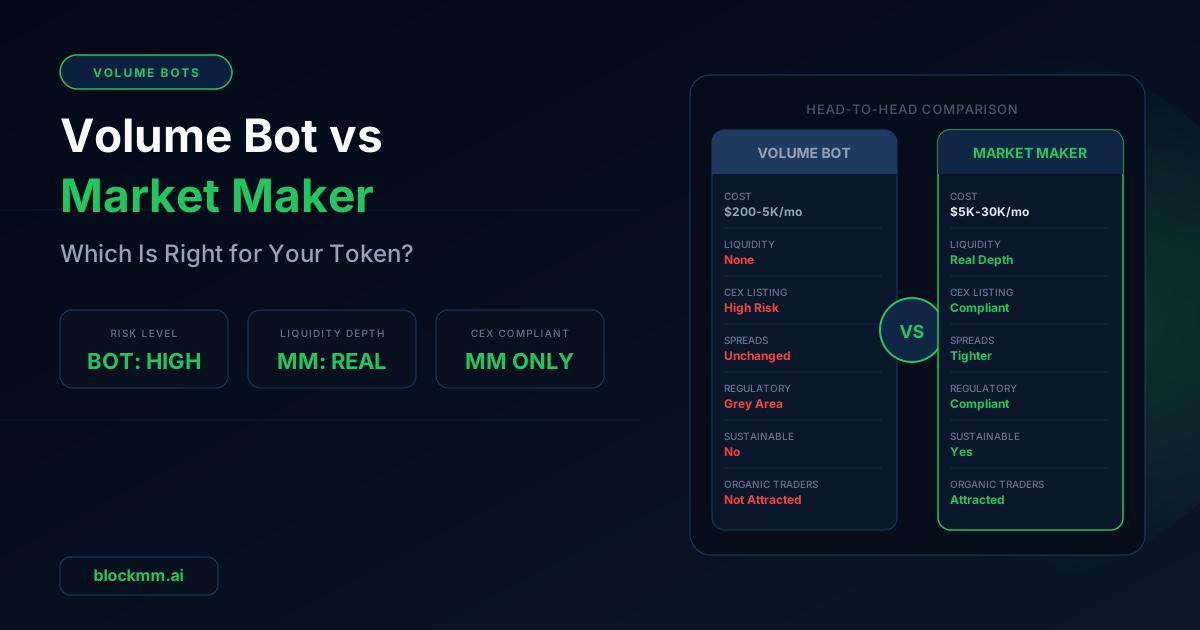
Volume Generation: Both approaches generate on-chain trading volume. Volume bots generate artificial volume that may be statistically detectable. Professional market making generates genuine volume from real spread trades with organic counterparties. Quality difference: significant.
Liquidity Depth: Volume bots generate no order book depth whatsoever. They are point-in-time transactions with no resting limit orders. Professional market makers maintain continuous buy and sell walls across multiple price levels, creating visible and functional liquidity depth. Quality difference: complete.
Bid-Ask Spread: Volume bots have no impact on the bid-ask spread, which is determined by passive limit orders in the order book, not by market order execution. Professional market makers narrow the bid-ask spread directly by placing competitive limit orders on both sides. A tighter spread is a quantifiable improvement in trading quality for every organic trader in the market.
CEX Listing Compliance: Volume bots generate artificial patterns that major CEX listing teams identify using on-chain analytics. A history of detectable wash trading can permanently disqualify a token from listing consideration. Professional market making generates exchange-compliant trading history that listing teams recognize as normal, professional market activity.
Sustainability: Volume generated by a bot stops immediately when the bot stops operating. There is no residual benefit, no lasting improvement to market quality, and no organic continuation. Professional market making improves the underlying market structure over time, attracting organic traders who then continue to trade the token independently of the market maker's ongoing activity.
Monthly Cost: Volume bot subscriptions range from $200 to $5,000 per month. Professional market making typically costs $5,000 to $30,000 per month depending on the token's market cap, volume targets, and chain. The cost premium is real.
Return on Investment: Volume bots provide a short-term volume metric improvement with high risk of destroying long-term listing prospects. Professional market making provides sustainable market improvement with clear pathways to the major exchange listings that drive project valuation multiples. When measured against the value of a successful Bybit, OKX, or Binance listing, the return on professional market making investment is typically many multiples higher.
When a Volume Bot Might Make Sense
There are specific, narrow scenarios where a volume bot may be an appropriate tool:
Very early bonding curve phase: Tokens on bonding curve platforms like pump.fun and hood.fun (Robinhood Chain) need to hit volume thresholds to graduate to DEX trading. At this stage, there is no CEX listing plan, no exchange compliance concern, and the project's primary goal is simply hitting the graduation threshold. A volume bot used specifically for this purpose, for a limited time, carries lower strategic risk than using one for long-term market maintenance.
DEX screener bridging: For a project that has genuine organic community support but is in a temporary low-volume trough between marketing campaigns, a volume bot used for a short period to maintain minimum screener visibility may be defensible. The key word is "temporary": if the project cannot sustain organic volume without artificial support within a defined timeframe, the volume bot is masking a product-market fit problem that no amount of artificial activity will solve.
No near-term CEX listing plans: Projects that are 12 or more months away from any serious CEX listing consideration, and that do not have institutional investors conducting due diligence, face lower immediate consequences from artificial volume patterns. The risk is that these patterns accumulate in the on-chain record and become a problem when listing plans eventually materialize.
When You Need a Professional Market Maker
Professional market making is the appropriate choice in the following scenarios, all of which apply to serious token projects:
Exchange listing preparation: Any project within 12 months of a targeted CEX listing application should be working with a professional market maker from the start. Building a 12-month track record of genuine, exchange-compliant trading volume and liquidity depth is one of the most effective ways to differentiate a token application during the listing review process.
Institutional investor due diligence: Institutional crypto funds and family offices that are considering significant token investments conduct on-chain due diligence as a standard part of their process. Artificial volume patterns visible to any analyst with basic on-chain tooling will cause institutional investors to pass on a token regardless of how strong the fundamental narrative is.
Long-term price stability: Tokens that rely on volume bots for their apparent market activity experience extreme volatility when the bot stops or malfunctions. Professional market making provides a consistent price floor and ceiling through active bid-ask management, reducing the volatility that drives away long-term holders.
Post-listing maintenance: After a successful CEX listing, professional market making is essential for maintaining the trading quality standards that the exchange requires to keep the listing active. Exchanges delist tokens that fail to maintain minimum trading quality metrics, and professional market making is the standard way to maintain those metrics sustainably.
Making the Right Choice for Your Token
The honest framing is this: volume bots are a stopgap that buys short-term metrics at the cost of long-term strategic options. Professional market making is an investment that builds the infrastructure that long-term strategic options depend on. If your project has realistic ambitions for major exchange listings, institutional investment, or building a durable secondary market, professional market making is not optional. It is the foundation that everything else is built on.
For more context on how market making fits into a complete token strategy, read our guide on what is market making in crypto and browse our market making guides. To discuss how BlockAI's market making service can replace your volume bot dependency and build real market infrastructure for your token, visit BlockAI's professional market making service.
Frequently Asked Questions
What is the main difference between a volume bot and a market maker?
A volume bot generates artificial circular transactions to inflate the 24-hour volume metric without providing real liquidity. A professional market maker places genuine buy and sell limit orders at competitive prices, providing real liquidity that organic traders can fill against. Market making creates real market infrastructure; volume bots create only the appearance of activity without the underlying economic substance.
Can a volume bot help with CEX listing applications?
Volume bots can produce volume numbers that satisfy raw metric thresholds in a listing application, but exchange listing teams analyze the quality and pattern of trading history, not just the headline number. Artificial volume patterns are detectable and can cause permanent listing rejection from major exchanges. Professional market making provides CEX-compliant volume that holds up under scrutiny and signals institutional-quality market management.
How much more expensive is professional market making than a volume bot?
Professional market making typically costs $5,000 to $30,000 per month, while volume bot subscriptions range from $200 to $5,000 per month. The premium for market making is real, but so is the value difference: real liquidity depth, tighter spreads that attract organic traders, exchange-compliant trading history, and sustainable volume growth that does not collapse the moment the service stops.
When does a volume bot make more sense than a market maker?
Volume bots may make sense in very specific early-stage scenarios: maintaining minimum screener visibility during a bonding curve phase before any CEX listing plans exist, or bridging a short gap before organic volume is established. For any project planning a serious CEX listing within 6 to 12 months, professional market making is the appropriate infrastructure from the start. Learn more at BlockAI's professional market making service.
Will a market maker replace organic trading or complement it?
A professional market maker complements organic trading by providing the liquidity infrastructure that makes organic trading easier and more attractive. Tighter spreads reduce the cost of entering and exiting positions, visible order book depth reduces slippage anxiety, and consistent price stability encourages more traders to engage with the token. Market making does not replace organic demand but amplifies and sustains it through better market structure.
Launching a token? We can help.
BlockAI runs end-to-end token launch campaigns — market making, community growth, KOL outreach, and post-launch liquidity support.
Explore token launch services