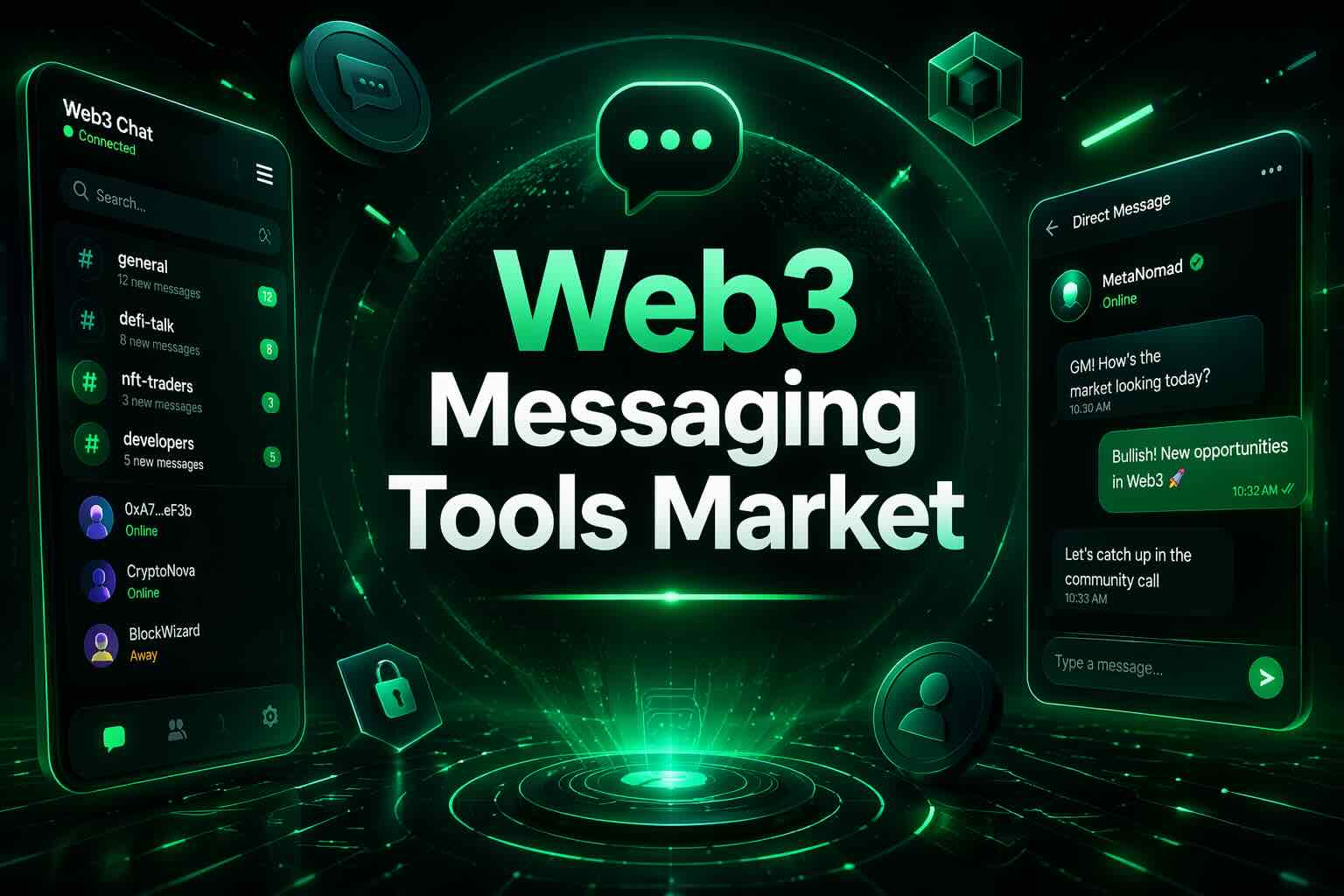
The numbers don't lie. Web3 messaging tools just hit a $3.3 billion market size in 2024, and they're racing toward $56 billion by 2035. That's a staggering 29.42% compound annual growth rate.
But here's what most people miss: this isn't just another tech trend. It's a fundamental shift in how we think about communication, privacy, and user ownership. And if you're building in Web3 or crypto, you need to understand what's happening here.
Why Web3 Messaging Is Actually Taking Off
Forget the hype for a second. The real driver behind this growth isn't some abstract vision of decentralization. It's practical stuff that users actually care about.
Privacy concerns are through the roof. People are tired of having their conversations mined for ad targeting. They want control over their data. And they're willing to switch platforms to get it.
But it goes deeper than that. Traditional messaging platforms create silos. Your Discord doesn't talk to your Telegram. Your business communications are trapped in Slack. Web3 messaging tools are starting to solve this with interoperability that actually works.
The blockchain integration piece is interesting too. We're not talking about putting every message on-chain (that would be insane). Instead, smart web3 messanger platforms use blockchain for identity verification, secure key exchange, and value transfers within conversations.
The Real Market Drivers
Let's break down what's actually pushing this market forward:
Enhanced Privacy Features: End-to-end encryption is table stakes now. The winning platforms are adding features like message expiration, anonymous messaging, and zero-knowledge proofs for identity verification.
Decentralized Communication Solutions: Users want alternatives to Big Tech platforms. They're looking for messaging tools that can't be shut down by a single company or government.
Interoperability Across Platforms: The ability to communicate seamlessly across different networks and protocols. This is huge for DAOs and cross-chain communities.
Integration with DeFi and NFTs: Messaging platforms that let you send tokens, trade NFTs, or coordinate DAO governance without leaving the chat interface.
Market Segments That Actually Matter
Technology Breakdown
Blockchain-based messaging holds the largest market share right now. Makes sense - it's the most mature technology in this space. These platforms use blockchain for identity management and secure communication channels.
But end-to-end encrypted messaging is the fastest-growing segment. The Asia-Pacific region is driving a lot of this growth, particularly in markets where privacy concerns are paramount.
The interesting part? Most successful platforms combine both approaches. They use blockchain for the underlying infrastructure and identity layer, then layer end-to-end encryption on top for message content.
Deployment Patterns
Cloud-based solutions dominate the market today. They're easier to scale and maintain. But on-premises deployments are actually the fastest-growing segment.
Why? Enterprise adoption. Companies want the benefits of Web3 messaging but need to maintain control over their infrastructure. This is creating opportunities for hybrid solutions that offer the best of both worlds.
User Segments
Individual users make up the largest segment by volume. But small and medium enterprises are the fastest-growing segment by revenue. These businesses are looking for secure communication tools that can scale with their growth.
The enterprise angle is particularly interesting. DAOs need communication tools that support decentralized governance. DeFi protocols need secure channels for coordinating updates and emergency responses. NFT communities want platforms that integrate with their collections and marketplaces.
Regional Market Dynamics
North America: The Innovation Hub
North America holds about 45% of the global market. The U.S. leads in innovation, with companies like Signal Foundation and Discord pushing the boundaries of what messaging platforms can do.
The regulatory environment here is relatively favorable. There's growing government focus on digital privacy, which creates demand for more secure communication tools.
Europe: Privacy-First Markets
Europe represents about 30% of the market. GDPR and other privacy regulations are driving adoption of platforms that give users more control over their data.
Countries like Germany and France are particularly active. Matrix.org and Element are gaining significant traction by focusing on compliance and data sovereignty.
Asia-Pacific: Rapid Growth
Asia-Pacific holds 20% of the market but is growing the fastest. High internet penetration and a young, tech-savvy demographic are driving adoption.
China and India are leading the charge. Despite regulatory challenges, there's significant investment in blockchain technology and decentralized applications.
Key Players and Competitive Landscape
The competitive landscape is fascinating because it includes both Web3-native platforms and traditional companies adapting to the new paradigm.
Web3 Native Players: Status, Matrix.org, Element, and emerging platforms like Obsidian are building from the ground up with decentralization in mind.
Traditional Players Adapting: Discord is adding Web3 features. Telegram has been crypto-friendly for years. Even Signal is exploring blockchain integration.
Enterprise Focused: Companies like Gilded are targeting business users who need secure, compliant communication tools.
The winners will be platforms that solve real communication problems while delivering on the Web3 promise of user ownership and privacy.
What This Means for Crypto Projects
If you're building in crypto or Web3, this market growth has direct implications for your project.
Community Building
Traditional Discord servers and Telegram groups are fine for basic community management. But as your project grows, you'll want communication tools that integrate with your ecosystem.
Imagine being able to verify token holdings directly in chat. Or having governance discussions where voting happens seamlessly within the conversation. These aren't future features - they're available today on the right platforms.
Marketing and Engagement
Web3 messaging tools open up new possibilities for user engagement. You can reward active community members with tokens. You can create exclusive channels for NFT holders. You can even integrate trading functionality directly into your community spaces.
The key is choosing platforms that support these integrations without compromising on user experience.
Business Operations
For crypto businesses, secure communication isn't just nice to have - it's essential. You're dealing with high-value transactions and sensitive strategic information. Traditional platforms might not cut it.
Web3 messaging tools offer better security, compliance features, and integration with crypto business tools.
BlockAI
Ready to grow your project?
BlockAI provides premium marketing, market making, and launch services for crypto and Web3 projects.
Try BlockAI BotTechnical Considerations
Integration Challenges
Most Web3 messaging platforms expose APIs, but integration quality varies widely. Some platforms make it easy to build custom bots and automations. Others require significant development work.
If you're planning to integrate messaging into your crypto project, evaluate platforms based on their developer tools and documentation quality.
Scalability Concerns
Not all Web3 messaging solutions scale well. Blockchain-based platforms can have throughput limitations. Make sure any platform you choose can handle your projected user growth.
User Experience
The best Web3 messaging platform is useless if your users can't figure out how to use it. Look for platforms that abstract away the complexity while still delivering Web3 benefits.
Future Market Opportunities
The 29.42% CAGR tells us this market is far from mature. Several trends will shape the next decade:
AI Integration
AI-driven chatbots and automated community management are becoming standard features. The winning platforms will integrate AI in ways that enhance human communication rather than replacing it.
Cross-Chain Interoperability
As the multi-chain future becomes reality, messaging platforms that work seamlessly across different blockchains will have a significant advantage.
Enterprise Adoption
Enterprise adoption is still early but growing fast. Companies need secure, compliant communication tools that integrate with their existing business processes.
Emerging Markets
Localized messaging solutions for emerging markets represent a huge opportunity. Different regions have different privacy concerns, regulatory requirements, and user preferences.
Practical Next Steps
If you're convinced that Web3 messaging tools could benefit your project, here's how to get started:
-
Evaluate Your Current Setup: What communication tools are you using now? What limitations are you hitting?
-
Define Your Requirements: Do you need token-gated channels? Governance integration? Trading functionality?
-
Test Different Platforms: Don't just read the marketing materials. Set up test communities and see how the platforms actually work.
-
Consider Integration Needs: How will messaging integrate with your broader tech stack?
-
Plan Your Migration: Moving communities is disruptive. Plan carefully to minimize user friction.
The Infrastructure Play
Here's something most people miss: the real opportunity in Web3 messaging isn't just in the end-user applications. It's in the infrastructure that powers them.
Projects need reliable ways to communicate with their users. They need notification systems that work across different platforms. They need automation tools that can handle community management at scale.
This is where platforms like BlockAI come into play. We've built infrastructure that helps crypto projects launch successfully and maintain healthy communities. Our Telegram bot at @Block_AIBot integrates with 12 different blockchain networks and provides tools for volume ordering, bridge swaps, and community management.
The point isn't just to use Web3 messaging tools - it's to build your entire community and marketing infrastructure around technologies that align with Web3 principles.
Looking Ahead
The Web3 messaging tool market growing from $3.3 billion to $56 billion isn't just about bigger numbers. It represents a fundamental shift in how we think about digital communication.
For crypto founders and Web3 developers, this creates both opportunities and challenges. The opportunities are in building more engaged communities, creating new user experiences, and integrating communication deeply into your product offering.
The challenges are in choosing the right platforms, managing the complexity of new technologies, and helping users adapt to different ways of communicating.
But here's the thing: you don't have to figure this out alone. The infrastructure already exists to help you take advantage of these trends. Whether you're launching a new token, building a DeFi protocol, or creating the next breakthrough Web3 application, the right communication and marketing infrastructure can make the difference between success and failure.
Ready to explore how Web3 messaging and marketing infrastructure can accelerate your project's growth? Connect with our team at @Block_AIBot and let's discuss how to position your project for success in this rapidly evolving market.
Frequently Asked Questions
How big is the Web3 messaging tools market?
The Web3 messaging tools market reached $3.3 billion in 2024 and is projected to grow to $56 billion by 2035. That trajectory represents a compound annual growth rate of 29.42%.
Which region dominates the Web3 messaging market?
North America holds about 45% of the global market, led by U.S. companies like Signal Foundation and Discord. Europe accounts for roughly 30%, where GDPR and similar privacy regulations are pushing adoption of platforms that give users direct control over their data.
What is driving growth in the Web3 messaging market?
Privacy concerns, demand for decentralized communication that cannot be shut down by a single company, and integration with DeFi and NFT workflows are the primary drivers. The fastest-growing segment is end-to-end encrypted messaging, with the Asia-Pacific region leading that growth.
What should crypto projects look for when choosing a Web3 messaging platform?
Projects should evaluate API quality, developer documentation, and the platform's ability to scale with user growth, since blockchain-based solutions can have throughput limitations. Platforms that abstract away technical complexity while still delivering Web3 identity and privacy features tend to have better user adoption rates.